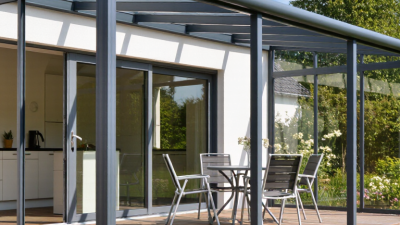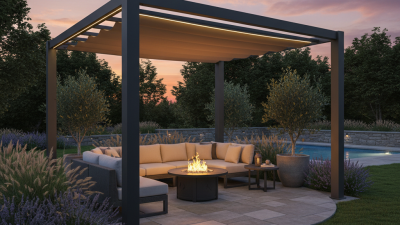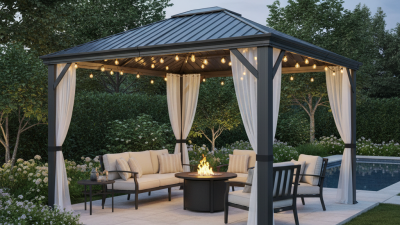
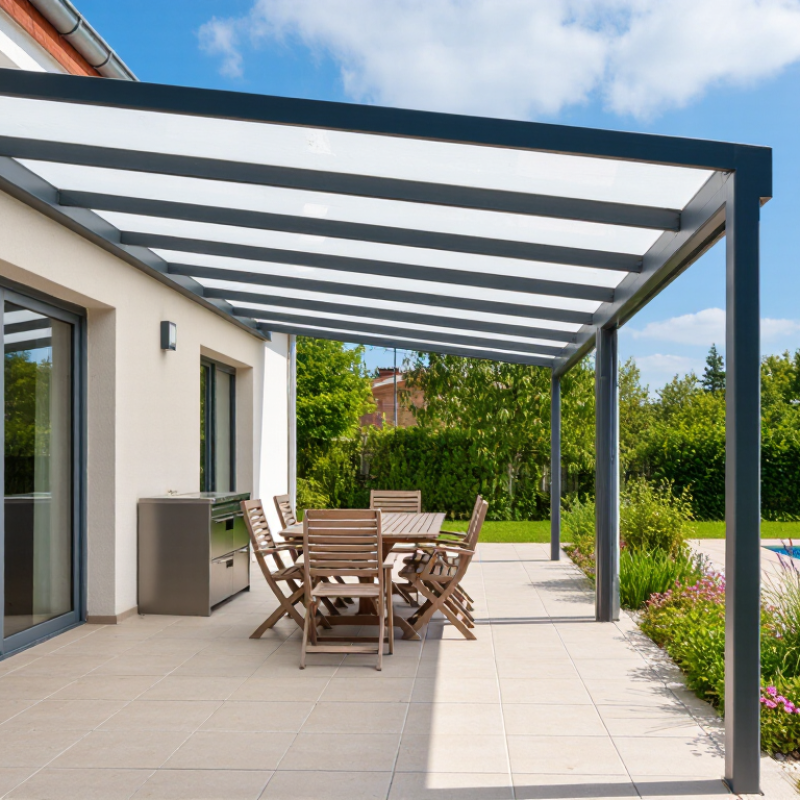
Outdoor living should feel effortless, but the structure supporting it must work hard. An Aluminum Veranda can create a cool, sheltered extension beside the kitchen, garden, or pool. Its slim frame allows more daylight through the roof. Powder-coated surfaces also resist peeling, fading, and everyday moisture better than untreated timber.
Mark Boucher, a veranda design specialist with more than two decades of installation experience, explains, “A good veranda should disappear into the home while protecting the people underneath it.” That balance matters. The best designs consider roof drainage, local wind exposure, thermal movement, and safe fixing points. They also match the house rather than looking like an added metal box.
Aluminum is lightweight, yet it offers impressive structural strength. It will not rot, attract termites, or demand annual staining. A soft brush, mild soap, and occasional inspection can keep the frame looking clean. Still, no material is perfect. Dark finishes may become hot in strong sun. Poor installation can cause leaks, vibration, or uneven drainage. I have seen beautiful verandas weakened by rushed measurements.
A dependable supplier should provide clear specifications, engineering guidance, and installation details. Ask about coating quality, drainage channels, warranty coverage, and local building requirements. Small questions matter. When planned carefully, an Aluminum Veranda can turn a bare patio into a comfortable room without walls. That practical transformation is the real reason many homeowners choose it.
Aluminum’s 2.7 g/cm³ density supports a lighter veranda design. The International Aluminium Institute identifies aluminum’s density as approximately 2.7 g/cm³. Steel is roughly three times heavier. This difference can simplify handling during delivery and assembly. Two workers can often position manageable frame sections without heavy lifting equipment. That matters beside gardens, patios, and narrow access paths.
Lightweight does not mean weak. Properly shaped aluminum profiles gain stiffness through geometry, not mass alone. The Aluminum Association’s Aluminum Design Manual emphasizes load calculations, connections, and deflection control. A professional design should assess local wind, snow, drainage, and attachment conditions. Thin profiles may look elegant, but undersized sections can vibrate or flex. Appearance is not engineering.
Aluminum also resists rust because it forms a protective oxide layer. The International Aluminium Institute reports that recycled aluminum requires about 5% of the energy used for primary production. Reuse can therefore reduce material impact when collection and processing systems work well. Still, coatings can scratch, fasteners can loosen, and thermal movement needs allowance. That advantage is not absolute. I would inspect joints after severe weather and keep gutters clear. Small maintenance habits protect the lightweight structure over time.
Why Choose an Aluminum Veranda for Outdoor Living?
An aluminum veranda can create a cooler, more usable outdoor room beside your home. Its frame resists rot, insects, and seasonal moisture better than many untreated materials. Yet the coating deserves equal attention. A strong structure can still look tired if its finish fades, chips, or develops corrosion around damaged areas.
AAMA 2604 is a recognized performance standard for high-quality powder coatings used outdoors. It evaluates properties such as color retention, gloss retention, film adhesion, impact resistance, and resistance to humidity and salt spray. These tests provide useful evidence, not empty decoration. Ask for documentation showing that the coating system was tested against the current standard. The aluminum preparation also matters. Cleaning, pretreatment, coating thickness, and curing temperatures can affect long-term results.
In practical use, a properly finished veranda should handle bright sunlight, rain, and ordinary cleaning with limited maintenance. Choose a coating suitable for your local exposure. Coastal air is more demanding than a sheltered inland garden. Powder coating is not magic. Scratches, cut edges, trapped moisture, and harsh chemicals can still shorten its life. I would also inspect joints and drainage paths during installation, because small water traps often become larger problems later. AAMA 2604 can support a reliable choice, but workmanship remains part of the durability story.
| Evaluation Dimension | Aluminum Veranda Consideration | Relevant Data or Standard | Practical Outdoor-Living Benefit |
|---|---|---|---|
| Base material | Aluminum is a lightweight structural metal commonly used for outdoor frames, roof supports, and architectural profiles. | Aluminum density is approximately 2.70 g/cm³, substantially lower than steel at approximately 7.85 g/cm³. | Lower weight can simplify handling and installation while still allowing engineered structural sections to support outdoor roof systems. |
| Protective oxide layer | Bare aluminum naturally forms a thin oxide film when exposed to air. | The oxide layer helps limit further oxidation, although aluminum can still experience pitting or galvanic corrosion in aggressive conditions. | Provides a useful foundation for long-term outdoor use when detailing, drainage, fasteners, and surface treatment are properly selected. |
| Powder-coating standard | AAMA 2604 is a high-performance architectural coating specification for aluminum extrusions and other architectural aluminum components. | The specification addresses coating performance through requirements such as film properties, adhesion, hardness, chemical resistance, humidity resistance, salt-spray resistance, and weathering exposure. | Offers a defined quality benchmark beyond simply describing a finish as “powder coated.” |
| Weather and UV exposure | A properly applied architectural powder coating is designed to resist outdoor deterioration better than ordinary interior-grade coatings. | AAMA 2604 includes outdoor weathering evaluation; actual color retention depends on pigment, gloss level, exposure, climate, and coating quality. | Helps the veranda maintain a consistent appearance under sunlight, rain, and seasonal weather changes. |
| Coating adhesion | Coating durability depends on correct cleaning, pretreatment, application, curing, and substrate preparation. | AAMA 2604 evaluates coating adhesion and related film properties; compliance should be confirmed through project documentation or testing records. | Reduces the risk of premature peeling or flaking when manufacturing and installation practices are controlled. |
| Salt and humidity exposure | Coastal or humid locations require careful pretreatment, sealed joints, suitable fasteners, and regular removal of salt deposits. | AAMA 2604 includes laboratory resistance testing related to humidity and salt-spray conditions, but it does not eliminate the need for site-specific corrosion protection. | Supports more reliable service in challenging climates when the complete system—not only the coating—is properly specified. |
| Maintenance needs | Powder-coated aluminum generally requires routine cleaning rather than painting or sealing at frequent intervals. | Use clean water and a mild, non-abrasive detergent; avoid harsh solvents, abrasive pads, and strong alkaline or acidic cleaners unless approved for the coating. | Reduces recurring upkeep and helps preserve the finish, especially where airborne salt, dust, or pollution can accumulate. |
| Thermal behavior | Aluminum transfers heat readily and expands or contracts with temperature changes. | Aluminum’s coefficient of thermal expansion is approximately 23 × 10−6/°C; design joints should accommodate movement. | Properly designed expansion allowances help prevent stress, noise, distortion, or water-management problems in large veranda assemblies. |
| Structural design | The frame must be selected for local wind, snow, rain, drainage, span, anchorage, and roof loads. | AAMA 2604 is a coating-performance specification, not a substitute for structural engineering, building-code compliance, or site-specific load calculations. | Clarifies that long-lasting appearance and safe structural performance are separate design requirements. |
| Material recovery | Aluminum can be recycled and reused through established metal-recovery systems. | Recycling outcomes depend on collection, alloy separation, coatings, local facilities, and the design of the complete assembly. | Can support end-of-life resource recovery when components are designed for disassembly and local recycling infrastructure is available. |
Important note: AAMA 2604 applies to coating performance and does not guarantee a fixed service life in every climate. Final durability depends on alloy selection, pretreatment, coating application, installation details, maintenance, environmental exposure, and structural design.
An aluminum veranda can turn a bare patio into a shaded, usable room. It provides shelter from strong sun and light rain without the heavy appearance of masonry. Aluminum also resists rust, which matters around damp gardens and coastal air. Slim frames can leave more space for daylight, plants, and outdoor seating.
The environmental case is equally important. According to International Aluminium Institute data, recycled aluminum uses about 95% less energy than primary aluminum production. That difference comes from remelting existing material instead of extracting and refining new ore. Less energy usually means lower production impacts. The figure is significant, but it is not magic.
Recycling still depends on collection, sorting, transport, and efficient manufacturing. Painted parts, mixed materials, and poor disposal can complicate recovery. A responsible project should ask where the aluminum comes from and how the structure can be dismantled later.
Keep it simple. Choose durable components, avoid unnecessary replacements, and maintain drainage channels so water does not collect around fixings.
In real outdoor spaces, small details matter. A veranda may reduce environmental pressure, but only when its long service life and future recyclability are considered. That part is easy to overlook.
Why Choose an Aluminum Veranda for Outdoor Living?
Eurocode snow and wind loads determine whether a veranda remains safe during severe weather. Aluminum offers low weight, corrosion resistance, and clean profiles. The structure still needs careful engineering. EN 1991-1-3 calculates snow actions using characteristic ground snow load, roof shape, exposure, and thermal coefficients. Values differ sharply between regions.
For perspective, a 1.0 kN/m² snow load equals approximately 102 kilograms per square metre before roof-shape factors. That load can bend an undersized beam or overload a connection. The European Commission Joint Research Centre’s Eurocodes guidance stresses site-specific parameters and national annexes. A local snow map is not optional.
Wind deserves equal attention. EN 1991-1-4 uses basic wind velocity, terrain category, height, and pressure coefficients. At 30 metres per second, dynamic pressure is roughly 0.55 kN/m² in standard air. Cladding, posts, anchors, and wall connections may experience different forces. Corner zones are often critical.
Small details matter. A site inspection should check roof drainage, fasteners, foundation movement, and nearby shelter. Shelter can reduce wind, but it can also create uneven pressure. That is easy to miss. In practice, a neat calculation may still fail when installation differs from drawings. Competent designers should verify the national annex, serviceability deflection, uplift resistance, and connection capacity before fabrication. The relevant references include CEN EN 1991-1-3, CEN EN 1991-1-4, and European Commission Joint Research Centre Eurocodes publications.
An aluminum veranda can reduce routine maintenance, especially in wet or coastal gardens. In my experience, timber needs regular inspection for splitting, rot, staining, and loose fixings. A neglected timber post can absorb water through a tiny surface crack. That damage often remains hidden until movement appears. Aluminum does not rot, warp, or attract wood-boring insects. It still needs care. Rinse dust and salt from the frame with clean water, then check drainage channels after heavy rain.
Lifecycle service is where the comparison becomes practical. Timber can usually be sanded, repaired, and refinished with familiar tools. However, these tasks may repeat every few years. Aluminum often keeps its finish longer, but dents, damaged coatings, or failed seals may require specialist parts. Check whether replacement panels, brackets, and fasteners remain available before installation. This detail is easy to overlook.
A professional installer should inspect roof falls, ventilation, fixings, and water run-off. Poor drainage can stain either material and shorten service life. Aluminum may offer steadier performance, yet its production has environmental costs. Recycled content and a long usable life can improve that balance. I would not call any veranda maintenance-free. Seasonal cleaning, visual checks, and prompt repairs still protect the structure and the space beneath it.