2026 How to Choose the Right Aluminum Round Tube for Your Project?
When embarking on a project, selecting the right materials is essential. Aluminum round tube is a versatile option that has various applications. Its lightweight nature and resistance to corrosion make it appealing for different industries. However, not all aluminum round tubes are created equal. Different specifications and grades can lead to confusion.
Understanding your project's specific requirements is crucial. Consider factors like diameter, wall thickness, and length. These aspects can significantly impact the performance and durability of your final product. Yet, many overlook the importance of precise measurements. Choosing the wrong size can lead to costly mistakes.
It's important to reflect on your choices. Asking the right questions can guide your decision-making process. What stresses will the aluminum round tube face? Will it be exposed to weather conditions? Ensuring you have all the facts is essential for a successful outcome. By prioritizing these considerations, you can find the perfect aluminum round tube for your needs.

Understanding Aluminum Round Tube Types and Grades
When selecting an aluminum round tube for your project, understanding the types and grades is crucial. Various grades of aluminum are available, such as 6061 and 6063. According to industry reports, 6061 is renowned for its strength and corrosion resistance. It's often used in structural applications. Meanwhile, 6063 is more malleable, making it ideal for intricate designs.
The wall thickness impacts the tube's performance. Thicker walls enhance strength but add weight. Conversely, thinner walls reduce weight but may compromise durability. The choice of wall thickness is often a trade-off. Recent studies indicate that selecting the right wall thickness can improve the overall efficiency of the project by 20%.
Factors like finishing also play a role. Anodized finishes provide extra protection but may affect dimensions. A report from the Aluminum Association notes that surface treatments can enhance lifespan significantly. Some projects overlook these details, leading to costly mistakes. Each component, even the grade and finish, shapes the ultimate success of your project.
Evaluating Mechanical Properties for Your Project Needs
When selecting aluminum round tubes, understanding mechanical properties is key. These properties determine how well the tube will perform in your specific application. Key aspects include tensile strength, yield strength, and fatigue resistance. For example, according to the Aluminum Association, a common alloy like 6061 has a tensile strength of 42,000 psi. This number is crucial for structural components.
Fatigue resistance is another vital property. How many cycles can the tube withstand before failure? Research indicates that certain alloys maintain integrity after millions of load cycles. This longevity can be a deciding factor for projects requiring durability. Lighter alloys, like 6005, may offer lower tensile strength but excel in corrosion resistance.
However, not all projects fit standard properties. Some projects may require custom solutions. This is where careful assessment of your specific mechanical needs comes into play. Consider the operating environment and load conditions. Ignoring these factors can lead to costly failures. Understanding your priorities will aid in making the right selection. Pay attention to the nuances and always calculate risks properly.
Factors to Consider: Diameter, Wall Thickness, and Length
When selecting an aluminum round tube, it’s essential to focus on diameter, wall thickness, and length. Each of these factors impacts the tube's suitability for your project. A larger diameter can provide more strength, but it can also add weight. If you need portability, a smaller diameter may be better.
Wall thickness is crucial. Thicker walls generally offer better durability but can make cutting and handling more challenging. If your project faces high pressure or harsh conditions, opt for thicker walls. Remember, trying to use a tube that’s too thin could lead to failure.
Tips: Measure twice, cut once. Ensure your measurements are precise. Test a few samples if possible. Sometimes, what seems perfect on paper doesn’t work in reality. Lastly, consider how the tube will connect to other parts. The right fit is necessary for stability. Choosing the right dimensions takes time, but it’s worth it.
2026 How to Choose the Right Aluminum Round Tube for Your Project?
When selecting aluminum round tubes, it’s important to consider factors like diameter, wall thickness, and length. The following chart illustrates the commonly used sizes and their corresponding weight capacities.
Applications of Aluminum Round Tubes in Various Industries
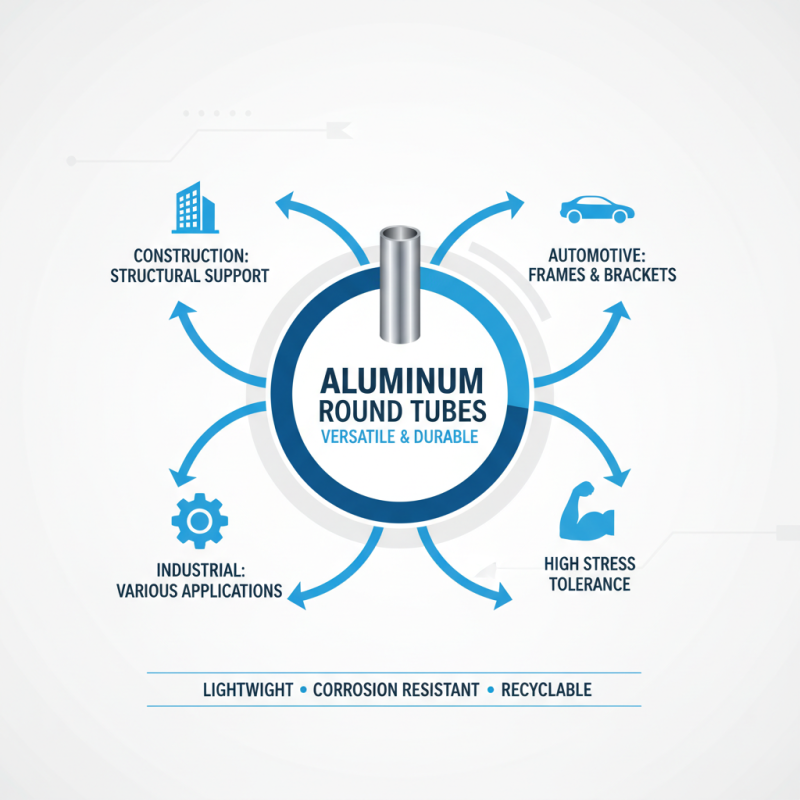
Aluminum round tubes are widely used across various industries. Their lightweight and durable properties make them ideal for multiple applications. In construction, they serve as structural supports. In automotive manufacturing, they are used for frames and brackets. These tubes often withstand significant stress, making them versatile.
According to recent industry reports, the demand for aluminum products is projected to grow by 5% annually through 2026. The aerospace sector increasingly utilizes aluminum round tubes for fuel lines and structural components. This growth is largely driven by the push for more fuel-efficient aircraft. However, sourcing high-quality aluminum becomes critical.
In electrical applications, these tubes function as conduits. They protect wiring while offering a sleek appearance. Despite their advantages, not all aluminum round tubes meet industry standards. Selecting the wrong type can lead to failures in projects. Scrutinizing material ratings is essential for long-term success in any industry.
Cost Considerations and Sourcing Options for Aluminum Tubes
When selecting aluminum round tubes, cost matters. Prices vary based on size, thickness, and grade. Standard sizes can be affordable, but custom lengths may increase the budget. Consider how these aspects impact your project expenses. Planning a meticulous budget helps avoid unexpected costs. Analyzing the specifications is crucial before placing an order.
Sourcing options for aluminum tubes abound. Local suppliers often offer quicker shipping times, but online retailers might provide better prices. Always compare quotes from different sources. Some suppliers specialize in specific aluminum grades. Exploring these specialties can improve your project outcome. Yet, be cautious; not all suppliers guarantee quality. Verifying credentials can save future headaches.
While looking for the right supplier, don’t rush the process. Focus on quality, even if it costs more initially. A low-priced tube may not suffice for long-term use. It could lead to replacement costs. Reflecting on these choices is vital for future projects. Good sourcing will pay off in the end.