Choosing reliable Aluminium Stairs manufacturers requires more than comparing prices or polished product images. Global buyers must examine alloy grades, load ratings, tread design, weld quality, and corrosion resistance. These details affect safety during installation, warehouse handling, and daily industrial use.
David Chen, a veteran aluminium access-equipment engineer, observes, “A safe stair begins with a clear load path.” His point remains practical. A strong frame means little when treads flex, handrails loosen, or feet slide on dusty concrete. Buyers should request drawings, inspection records, material certificates, and clear testing information. Product samples can also reveal uncomfortable truths that catalogues often hide.
This guide reviews leading China Aluminium Stairs manufacturers for international buyers. It considers factory capability, customization, quality control, packaging, communication, and after-sales support. Some suppliers excel at standard platforms. Others handle complex access systems, compact folding designs, or large industrial orders. Not every manufacturer will fit every project.
That is worth admitting.
A low quotation may reduce initial spending but increase installation delays, replacement costs, or compliance concerns. Buyers should also confirm whether dimensions, safety features, and documentation match the destination market. Reliable suppliers explain limitations instead of promising everything. This overview aims to support careful decisions through visible evidence, practical comparisons, and realistic expectations.
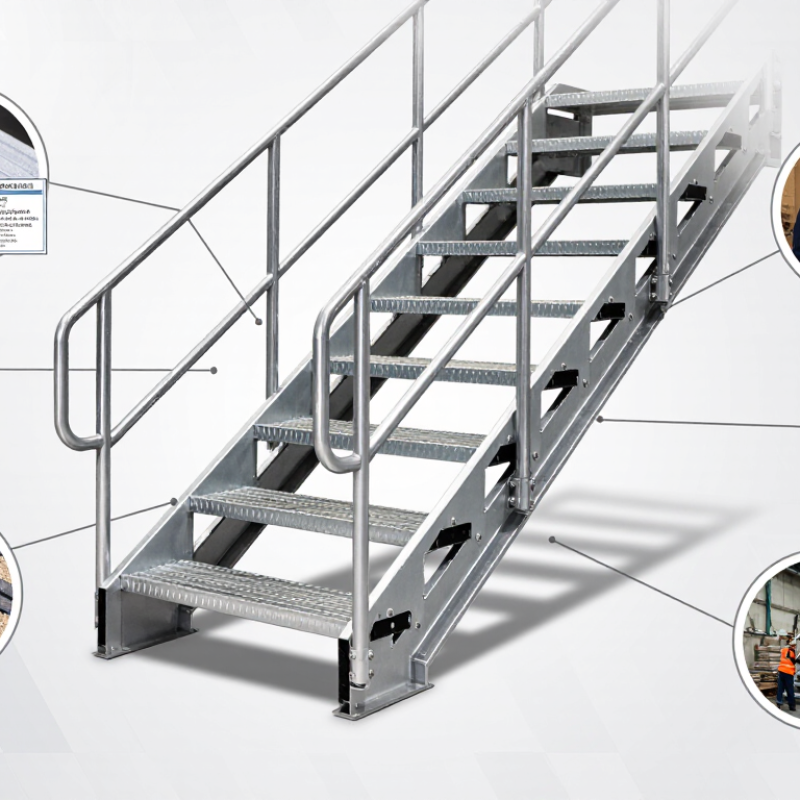
A leading China aluminium stairs manufacturer proves capability through consistent engineering, not polished catalog images. Its team understands alloy grades, extrusion tolerances, weld strength, and load paths. Factory experience matters when a staircase must fit a narrow service platform or uneven industrial floor. Reliable suppliers share drawings, material certificates, inspection records, and realistic production schedules before accepting an order. They ask about height, width, angle, handrail position, and installation conditions. That attention prevents expensive changes later.
Good details matter. A sample should feel rigid, with clean joints, even anodizing, and stable non-slip treads. Quality teams may check dimensions with calibrated tools and test assemblies under specified loads.
Independent inspections can add confidence, especially for overseas buyers unfamiliar with local production practices. Packaging also reveals discipline: corner protection, moisture control, labels, and clear assembly instructions reduce damage at the destination.
Professional manufacturers also communicate clearly across languages and time zones. They explain what is standard, what is customized, and what remains uncertain. This honesty is valuable. Some suppliers may promise every feature, yet lack documented testing or after-sales capacity. Buyers should examine response quality, corrective-action records, spare-part access, and warranty terms.
A factory visit, video inspection, or third-party audit can reveal workflow conditions that photographs hide. Ask to see actual weld preparation, surface treatment, and finished stair storage.
No supplier is flawless. Even a capable factory can miss a detail when drawings change late. The important measure is how quickly it identifies the issue, records the cause, and proposes a controlled correction. Long-term reliability comes from repeatable processes, traceable materials, skilled workers, and evidence that matches each claim.
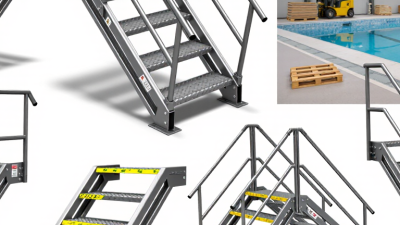
Global buyers usually begin with the product range, not the factory size. Chinese aluminium stair manufacturers commonly supply straight staircases, folding access steps, platform stairs, industrial ladders, and modular systems. The International Aluminium Institute reports that building and construction consume about one quarter of global aluminium demand. This supports aluminium’s role in lightweight access equipment.
Customization matters when a standard staircase does not fit the site.
Buyers can specify stair width, riser height, tread depth, platform length, handrail position, surface texture, and connection method. Useful options include serrated treads for wet areas, perforated platforms for drainage, and powder-coated finishes for controlled colour matching. For frequent assembly, bolted sections are easier to replace than fully welded structures. Small details matter. A two-millimetre mismatch can complicate installation.
Professional procurement should verify load calculations, alloy grades, weld quality, packaging, and inspection records. ISO 14122-3 provides guidance for permanent stairs, stepladders, and guardrails used with machinery. The International Organization for Standardization also stresses safe dimensions and fall protection principles. However, one standard rarely covers every export destination. Local building rules still require review. Ask for drawings, material certificates, factory test reports, and sample measurements before production. Even experienced buyers sometimes approve attractive samples too quickly. Aluminium can look perfect while a weak joint remains hidden. A practical trial assembly may reveal more than a polished catalogue.
Top China Aluminium Stairs Manufacturers for Global Buyers
Manufacturing quality begins with the alloy, not the catalog photograph. Many export-grade stairs use 6061-T6 or 6063-T5 aluminium for strength, corrosion resistance, and clean extrusion surfaces. The International Aluminium Institute reports that recycled aluminium requires about 5% of the energy used for primary aluminium production. Therefore, manufacturers should document recycled content, alloy certificates, and heat-treatment records. Material savings are useful, but excessive thinness can reduce stability.
Standards must match the destination market. EN 131 covers portable ladder design and testing, while ANSI ASC A14.2 addresses aluminium ladders in North America. OSHA 1910.23 also specifies requirements for workplace ladders and fall protection. Reliable factories test load capacity, rung spacing, weld penetration, surface coating, and locking mechanisms. ISO Survey 2023 recorded more than 1.2 million ISO 9001 certificates worldwide, but certification alone proves little. Buyers should request batch records, calibration certificates, and independent test reports. A factory may pass an audit and still miss a small burr.
Tips: Ask for a sample before bulk production. Check welds by hand. Measure every critical dimension. Confirm packaging protects corners during sea transport. Require photographs of final inspection, not only polished product images. Specifications can be misunderstood, especially after translation. Recheck them.
Top China Aluminium Stairs Manufacturers for Global Buyers
How Global Buyers Should Evaluate Chinese Stair Suppliers
A reliable supplier should explain aluminium grade, temper, thickness, and surface treatment clearly. Vague phrases like “premium quality” are not enough. Ask for load calculations, welding procedures, dimensional tolerances, and inspection records. These documents reveal technical capability better than attractive product photos.
Request a production sample before placing a large order. Check tread spacing, handrail strength, weld appearance, edge finishing, and joint movement. Measure the sample yourself, even when the supplier provides inspection data. A small mismatch can create installation delays. It happens.
Factory communication also deserves close attention. Can the engineering team answer questions about local building requirements? Do they confirm drawings, packaging details, and delivery responsibilities in writing? Suppliers should identify the aluminium source and explain how they control corrosion, especially for outdoor stairs near saltwater.
Visit the factory when possible, or appoint an independent inspector. Look for material labels, cutting equipment, welding stations, and finished-goods storage. Ask for recent project references from comparable climates and stair sizes. Certificates should be verified with the issuing organization, not accepted as decoration. I once treated a polished report as proof of consistency; production reality can be less tidy. Clear corrective-action records are more useful than perfect-looking paperwork. Also review export packaging, spare-part policies, and warranty limits before approving the final quotation.
How Global Buyers Should Evaluate Chinese Stair Suppliers
This buyer scorecard gives the greatest weight to safety compliance, product quality, and traceability. Buyers should request test reports, inspection records, material documentation, production samples, export references, and written commitments for lead time and after-sales support before selecting a supplier.
Export Services, Pricing Factors, and Order Processes
Reliable aluminium stair manufacturers usually begin with technical confirmation, not a quick price. Buyers should provide stair height, platform size, step spacing, load requirements, alloy preference, and surface finish. Clear drawings reduce costly revisions. They also help factories recommend suitable profiles and welding methods.
Export support may include product samples, inspection photos, protective packaging, commercial invoices, packing lists, certificates of origin, and shipping coordination. Ask whether the supplier can arrange palletized cartons, moisture protection, and container loading plans. Freight terms matter. FOB, CIF, and DDP can produce very different landed costs. Confirm responsibilities in writing.
Pricing depends on aluminium grade, profile thickness, stair dimensions, surface treatment, accessories, order quantity, packaging, and testing requirements. Custom tooling may add a separate charge. Freight and currency changes can also affect the final quotation. A low unit price may hide weaker packaging or limited inspection. Check the details.
The order process should include drawing approval, sample confirmation, purchase contract, deposit, production scheduling, inspection, balance payment, and shipment release. Request dimensional records and load-test evidence when appropriate. Keep one approved drawing for every revision. Small mistakes happen. We once saw a handrail measurement change after production began, causing avoidable rework. That risk is real. Allow time for communication delays, especially across time zones, and confirm every critical detail before mass production.