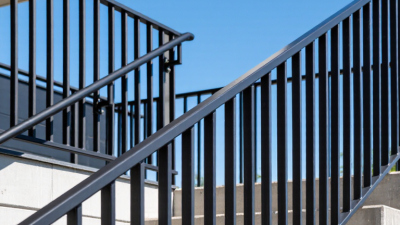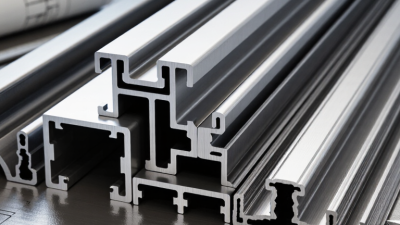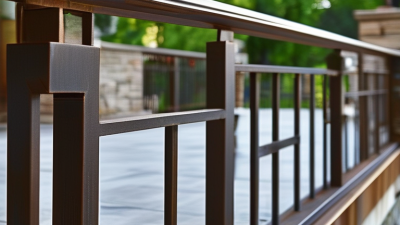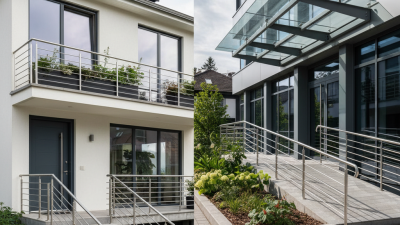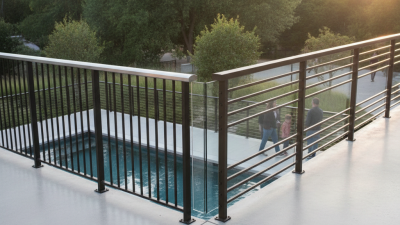
Choosing the right Aluminum Handrail affects safety, comfort, appearance, and long-term maintenance. A rail may look simple, yet its profile, mounting method, finish, and location change how it performs. Indoor stairways often suit slim wall-mounted rails. Outdoor ramps may need stronger post-mounted systems. Glass railings create another challenge, especially around brackets, drainage, and cleaning access.
This guide explores the top types of aluminum handrails and where each option works best. It considers round, square, rectangular, wall-mounted, post-mounted, and glass-compatible designs. Practical details matter. A smooth 42-millimeter tube can feel comfortable under the hand. A sharp square edge may look modern but feel unpleasant during daily use. Powder coating can add color and protection, although poor preparation may lead to early surface failure.
Experience from installation projects shows that lightweight does not mean weak. It means the system must be designed correctly. Connections, anchors, spacing, and substrate strength deserve careful attention. Local building requirements also vary, so product information should be checked against applicable regulations and professional guidance.
It matters.
Some decisions are easy to overlook. A dark finish may show dust near busy entrances. Brushed aluminum can hide small scratches better. However, no single handrail type suits every building. This comparison offers reliable starting points, while leaving room for site conditions, user needs, and honest reconsideration.
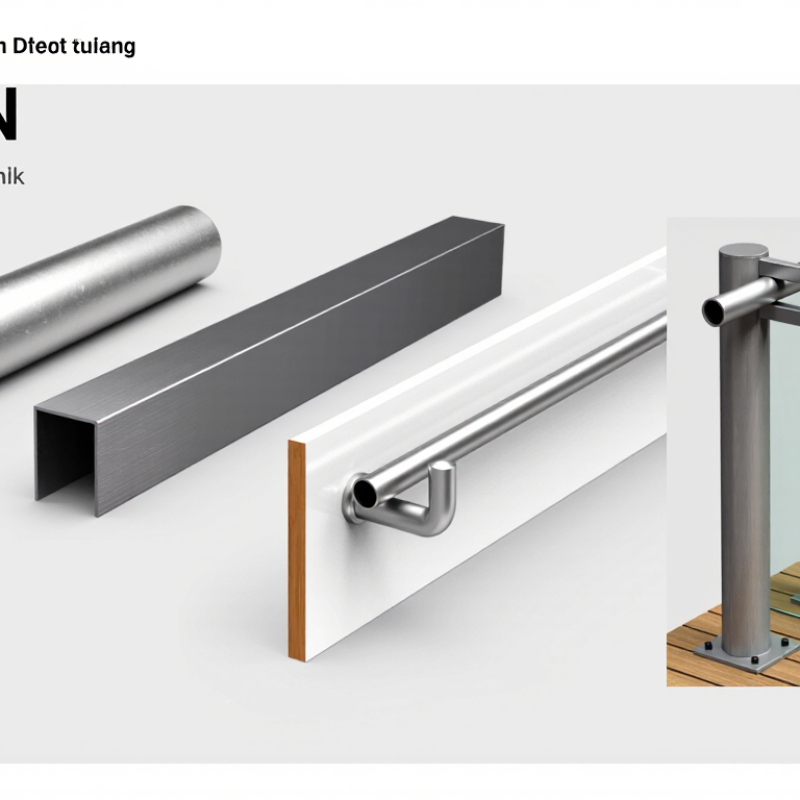
An aluminum handrail is a graspable support made from lightweight aluminum profiles, fittings, and mounting hardware. It guides people along stairs, ramps, balconies, and walkways. Unlike a guardrail, a handrail is designed for the hand, not only for preventing falls. Its shape, height, clearance, and attachment strength should match local building requirements.
Common types include wall-mounted rails, stair rails, ramp rails, and freestanding systems. Wall-mounted rails work well in narrow corridors because they preserve floor space. Stair rails usually follow the slope, while ramp rails need a continuous, comfortable grip. Freestanding rails suit open balconies and garden paths. Aluminum resists rust better than ordinary steel, especially when its surface receives anodizing or a suitable protective coating. However, it can still stain, scratch, or weaken when poorly installed.
During a practical inspection, I check the grip, joints, end returns, and anchor points. A loose bracket is more serious than a small surface mark. I also look for sharp edges near corners and water trapped inside fittings. Aluminum feels cool and can become slippery when wet, so profile texture matters. Color and finish often influence selection, but safety should lead the decision. One detail is easy to miss: different aluminum alloys and wall thicknesses perform differently. A rail may look solid yet flex under pressure. That is why load calculations, installation quality, and regular checks remain essential. Local codes can differ, so project drawings should be reviewed by a qualified professional.
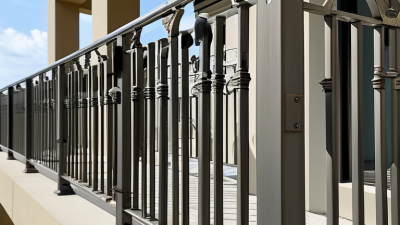
Aluminum handrails are lightweight, corrosion-resistant support rails commonly used on stairs, ramps, balconies, decks, corridors, and accessible routes. The most common configurations include round tube handrails, non-circular or rectangular profiles, wall-mounted rails, and post-and-rail systems.
The chart shows key dimensional requirements from the 2010 ADA Standards for accessible handrails. Round handrails should have a diameter of 1.25–2 inches, while non-circular profiles should have a perimeter of 4–6.25 inches and a maximum cross-section of 2.25 inches. Accessible handrails are generally installed 34–38 inches above the walking surface, with at least 1.5 inches of wall clearance.
Reference: 2010 ADA Standards for Accessible Design, Sections 505.4, 505.5, and 505.7.
Aluminum handrails vary by design and installation method. Round profiles provide a comfortable grip and suit ramps, balconies, and public walkways. Square and rectangular profiles create a sharper, contemporary appearance. Picket systems improve edge protection, while cable and glass infills preserve wider views. No single design fits every site.
Installation method changes performance. Surface-mounted rails attach to concrete with base plates and anchor bolts. They work well on finished stairs and decks. Fascia-mounted systems fix to the side of a stair or balcony, preserving walking width.
Core-drilled posts enter concrete or masonry and offer a clean visual line, but accurate drilling is essential. Prefabricated modular sections can reduce site labor, although poor measurements can create awkward joints.
The International Aluminium Institute reports that recycled aluminum requires about 5% of the energy used for primary production. That supports aluminum’s practical sustainability advantage, but recycled content and coating quality still need verification. In field inspections, I would check post spacing, anchor depth, drainage, and sharp edges before choosing a finish.
Tips: Select the profile by hand comfort, not appearance alone. Confirm substrate strength before ordering. Leave space for thermal movement. Review local accessibility and guardrail requirements with a qualified professional. Small measurement errors matter.
What Are the Top Types of Aluminum Handrails?
Aluminum Handrails for Indoor, Outdoor, and Accessibility Applications
Aluminum handrails suit many buildings because they are light, strong, and easier to handle during installation. Indoor systems often use smooth, powder-coated surfaces along stairways, balconies, and corridors. They resist daily contact and usually need only simple cleaning. A rounded profile feels comfortable under the hand. Small details matter.
Outdoor handrails face harsher conditions. Rain, sunlight, coastal salt, and winter grit can slowly damage poorly selected finishes. Anodized or durable coated aluminum can improve surface protection, but no finish is maintenance-free. Inspect joints, fasteners, and mounting points regularly. A loose connection can create a bigger problem than surface discoloration. For exposed decks, installers should also consider drainage and thermal movement.
Accessibility applications require more than an attractive rail. The handrail should provide a continuous, easy-to-grasp surface with enough clearance from nearby walls. Its height, extensions, returns, and visual contrast should match applicable local accessibility requirements. These details help people with limited balance, reduced strength, or visual impairments. Site measurements should happen before fabrication. Plans can miss uneven floors, unusual corners, or door swings. In practice, the best aluminum handrail is not always the most decorative option. A glossy finish may show fingerprints, while a textured finish may feel less comfortable. Careful assessment usually produces the safer, more usable result.
| Aluminum Handrail Type | Typical Application | Common Installation Location | Key Characteristics | Typical Profile or Configuration | Recommended Finish | Accessibility and Safety Notes | Maintenance Level |
|---|---|---|---|---|---|---|---|
| Wall-Mounted Handrail | Indoor circulation Stairways Corridors | Walls beside stairs, ramps, hallways, and public-access routes | Space-efficient design with concealed or exposed brackets; provides continuous support without floor posts | Round or oval aluminum tube, usually supported by wall brackets at regular intervals | Powder coating, anodizing, or a smooth mill finish for interior use | Should provide a continuous graspable surface with adequate clearance from the wall; exact dimensions and extensions should follow local building regulations | Low |
| Post-and-Rail Handrail | Outdoor stairs Ramps Walkways | Open-sided stairs, elevated paths, ramps, balconies, and platforms | Combines vertical posts with a top handrail; can be designed with intermediate rails or infill panels | Round, square, or rectangular top rail mounted on aluminum posts with base plates or embedded supports | Exterior-grade powder coating or anodizing; coating selection should suit the local climate | Guarding may be required where there is a fall risk; handrail and guard functions should be checked separately against applicable codes | Low |
| Tube Handrail | General purpose Residential Commercial | Staircases, ramps, balconies, entrances, and pedestrian paths | Simple, versatile, and easy to connect with elbows, brackets, flanges, and splice fittings | Round tube for comfortable gripping; square or rectangular tube for a more architectural appearance | Powder coating or anodizing; select a textured surface where additional slip resistance is useful | The profile should be easy to grasp and free from sharp edges, interruptions, or projections that could catch clothing | Low |
| Aluminum Railing with Integrated Handrail | Balconies Terraces Decks | Residential and commercial balcony edges, roof terraces, decks, and viewing platforms | Combines a top handrail with a guardrail system; suitable where edge protection and hand support are both needed | Top rail supported by posts with pickets, glass panels, cable infill, or other approved guard infill | Durable powder coating or anodizing designed for exterior exposure | Guard height, opening limitations, load resistance, and handrail geometry should be verified with the applicable building code | Low to moderate |
| Accessibility Ramp Handrail | Accessible routes Mobility access Public facilities | Pedestrian ramps, entrance approaches, transit areas, and accessible pathways | Designed to provide stable support along sloped routes; often installed on both sides when required by regulations | Continuous round or ergonomically shaped rail with posts, returns, and ramp-compatible fittings | Powder coating, anodizing, or another durable finish with clear visual contrast where needed | Ramp slope, handrail height, clear width, extensions, returns, and edge protection must comply with the governing accessibility standard | Low |
| Stair Handrail | Residential stairs Commercial stairs Emergency routes | Interior and exterior stair flights, landings, and stairwell approaches | Provides continuous support while ascending or descending; can be wall-mounted or supported by posts | Round tube, oval tube, or shaped profile installed parallel to the stair nosings | Interior powder coating or anodizing; exterior-grade coating for exposed stairways | Handrail continuity, height, graspability, extensions, and clearance should be coordinated with local stair regulations | Low |
| Glass-Panel Handrail System | Modern interiors Balconies Atriums | Stairs, balconies, mezzanines, terraces, and open-plan commercial spaces | Provides a visually open appearance while the aluminum top rail frames or caps the glass guard panel | Round or rectangular top rail with laminated or tempered safety glass, subject to project requirements | Anodized aluminum or durable powder coating; glass should be specified as safety glazing where required | Glass thickness, panel support, impact performance, guard height, and handrail continuity require project-specific engineering and code review | Low to moderate |
| Fold-Down or Swing-Away Support Rail | Accessible bathrooms Assisted-use areas | Toilet compartments, accessible washrooms, and specialized care environments | Movable support rail that can be raised or lowered to improve transfer space and user access | Pivoting aluminum rail with wall plate, locking mechanism, and optional support leg | Anodized or powder-coated aluminum with corrosion-resistant hardware | Must be securely anchored and selected for the intended load; placement and clearances should follow the applicable accessibility requirements | Moderate |
| Decorative Architectural Handrail | Interior design Hospitality Retail | Feature staircases, hotel lobbies, restaurants, offices, and reception areas | Prioritizes visual integration while maintaining a functional gripping surface and structural support | Custom round, square, oval, or formed aluminum profile with decorative brackets or fittings | Anodizing, powder coating, or approved specialty finish selected for the design intent | Decorative details should not compromise graspability, continuity, visibility, or required clearances | Low |
| Marine and Coastal Handrail | Marine facilities Coastal buildings Pool areas | Marinas, waterfront walkways, coastal stairs, pool decks, and outdoor facilities exposed to moisture | Lightweight and corrosion-resistant when the alloy, finish, fasteners, and drainage details are properly selected | Round or rectangular tube with sealed or drained connections and corrosion-resistant fittings | Marine-suitable powder coating or anodizing; avoid incompatible metals and use suitable fasteners | Regular inspection is important in salt-laden or wet environments; galvanic corrosion protection should be considered at connections | Moderate |
Key Materials, Finishes, and Structural Features to Compare
The best aluminum handrail depends on alloy, finish, and structural design. Extruded 6063-T5 aluminum offers clean profiles and reliable corrosion resistance. For heavier loads, 6061-T6 components may provide higher strength. The Aluminum Association’s Aluminum Design Manual emphasizes checking member strength, connections, and deflection together. A thick rail alone does not guarantee a safe system.
Finishes change appearance and service life. Anodizing creates a hard oxide layer with a metallic appearance. Powder coating offers broader color choices but can hide scratches and installation damage. Mill finish is economical, yet it shows stains quickly. USGS Mineral Commodity Summaries 2024 reported about 70 million metric tons of primary aluminum production worldwide in 2023. The International Aluminium Institute notes that recycling aluminum uses roughly 5% of the energy required for primary production. Material sourcing deserves attention. The cheapest option is not always the most responsible one.
When selecting an aluminum handrail, begin with the project’s users and movement patterns. A wall-mounted rail suits narrow corridors and stairways with limited floor space. Post-mounted systems work well on decks, ramps, and open balconies. For modern interiors, aluminum rails with glass infill provide visibility without losing edge protection.
Measure twice.
The environment should guide the material and finish. Aluminum performs well outdoors because it resists corrosion and remains relatively lightweight. Near saltwater, choose a suitable alloy and a durable protective finish. Wet areas also need profiles that shed water and connections that limit moisture traps.
Details matter.
Check the required height, clearance, grip size, and load capacity against local building requirements. A rail may look strong but still fail if its anchors meet weak masonry or damaged concrete. I have seen attractive installations become uncomfortable because the grip was too large for smaller hands. That mistake is easy to miss on drawings. Ask the installer to confirm substrate conditions before fabrication. Review corner returns, expansion joints, drainage, and access for maintenance. A small sample section can reveal sharp edges, poor alignment, or an unsuitable texture before the full order. These checks take time, but replacing a finished handrail takes longer.