Leave Your Message

Top 10 Chain Link Fence Types for Global Buyers

Choosing the right Chain Link Fence is rarely a simple matter of comparing prices. Global buyers must consider security needs, climate, installation conditions, maintenance, and local project standards. A fence that performs well beside a dry warehouse may fail near a humid coastline. Galvanized steel, vinyl-coated mesh, stainless steel, high-security designs, and temporary panels each serve different purposes. The details matter.

This guide examines ten practical Chain Link Fence types for international purchasing decisions. It explains mesh size, wire diameter, coating quality, post strength, gate compatibility, and expected service conditions. Experienced buyers also check packaging, loading efficiency, replacement parts, and supplier documentation before placing large orders. Small errors can become expensive.

Performance comes first.

Reliable specifications should match the actual site, not only a catalog photograph. Buyers may also need to confirm wind exposure, soil stability, animal pressure, visibility requirements, and maintenance access. These factors are sometimes overlooked, even by experienced teams. That deserves reflection. A lower initial price may hide thicker transport costs, uneven coating, or difficult installation.

The following overview compares ten common fence options through a practical, buyer-focused lens. It does not assume that one design fits every country or application. Instead, it highlights where each type works best, what limitations deserve attention, and which questions should be asked before procurement. With clear specifications and verified supplier experience, buyers can reduce uncertainty and select a Chain Link Fence that offers dependable value over time.
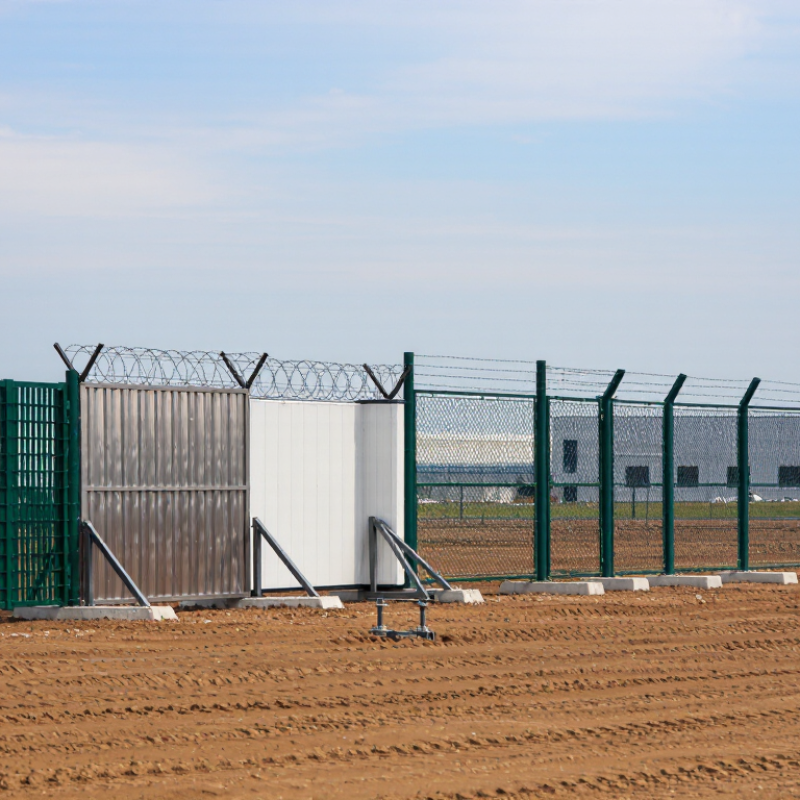
Top 10 Chain Link Fence Types for Global Buyers

Chain Link Fence Types by Material, Coating, and Construction

Top 10 Chain Link Fence Types for Global Buyers

Chain Link Fence Types by Material, Coating, and Construction

Material changes performance before appearance. The ten practical options include low-carbon steel, high-tensile steel, aluminum, stainless steel, galvanized steel, PVC-coated steel, polyethylene-coated steel, vinyl-coated steel, welded-edge mesh, and privacy-enhanced mesh. Steel remains the workhorse for perimeter security. Aluminum suits coastal projects because it resists rust and reduces handling weight. Stainless steel serves severe industrial environments, but its cost can challenge large tenders.

Coating selection needs local evidence. Hot-dip galvanizing provides a zinc barrier and sacrificial protection. Electro-galvanizing offers a smoother finish, but usually carries less zinc. PVC, polyethylene, and vinyl coatings add color and improve contact comfort. The American Galvanizers Association reports that hot-dip galvanized steel can achieve decades of service in many atmospheric conditions, although soil, salt, and abrasion change the result. Check coating mass, not only color.

Construction affects installation speed and security. The main choices are woven mesh, welded mesh, knuckle-knuckle edges, knuckle-barbed edges, and full barbed edges. A 2024 Grand View Research report valued the global fencing market at roughly US$30 billion in 2023, showing strong demand across infrastructure, agriculture, and housing. Yet broad market figures hide project differences. A rural fence may need flexible woven mesh, while a logistics site may need tighter openings and heavier posts. ASTM F567 installation guidance helps, but it cannot replace a site survey. That is where many specifications become imperfect. Wind loads, drainage, and damaged coatings still deserve closer review.
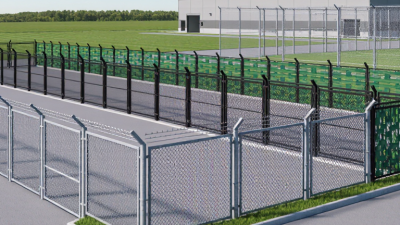
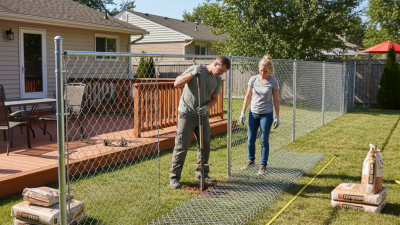
Top 10 Chain Link Fence Types for Global Buyers

Typical wire diameter by material, coating, and construction. Values represent commonly specified commercial configurations; actual sizes vary by mesh opening, height, strength requirement, and regional standard.

Heavier wire generally provides higher rigidity and impact resistance, while PVC or polymer coatings improve corrosion protection and appearance. Stainless steel and aluminum options are selected when long-term environmental resistance or low weight is important.

How Height, Mesh Size, and Wire Gauge Define Fence Performance

Top 10 Chain Link Fence Types for Global Buyers

How Height, Mesh Size, and Wire Gauge Define Fence Performance

The ten common chain link configurations differ mainly by height, mesh opening, wire gauge, coating, and installation purpose. Residential panels often use 4- to 6-foot heights, while commercial and high-security systems commonly reach 8 to 12 feet. Height improves deterrence, but it also increases wind pressure and post loading.

Mesh size matters just as much. A 2-inch opening supports general residential and commercial use. Smaller 1-inch or ¾-inch mesh limits hand access and helps contain smaller animals. ASTM F567/F567M installation guidance stresses proper post depth, tension, and alignment. A strong mesh still performs poorly when posts are shallow or under-braced.

Wire gauge defines resistance to bending and impact. A 9-gauge wire is heavier than 11.5-gauge wire and generally suits demanding commercial applications. Lightweight 11.5- or 12.5-gauge mesh can reduce project cost, but it may deform more easily. ASTM A392/A392M coating classifications also distinguish corrosion protection by zinc coating weight. Higher coating levels usually support longer service in wet or coastal environments.

Field experience reveals an uncomfortable detail. Buyers often compare price before loading conditions. That can create expensive repairs. A 6-foot fence with small mesh may outperform a taller, lighter fence in exposed areas. Wind exposure, soil strength, animals, and maintenance schedules deserve equal attention. No configuration is perfect.

Top 10 Chain Link Fence Types for Global Buyers - How Height, Mesh Size, and Wire Gauge Define Fence Performance

No. Typical Fence Type Common Height Mesh Size Typical Wire Diameter Common Material or Finish Security Level Visual Permeability Typical Applications How the Dimensions Affect Performance
1 Residential Standard Chain Link 1.2–1.8 m
(4–6 ft)
50 mm
(2 in)
11.5–9 gauge
(2.6–3.8 mm)
Hot-dip galvanized or PVC-coated galvanized wire Medium High Home boundaries, gardens, driveways, and low-risk property separation A 2 in mesh provides good visibility and airflow. Moving from 11.5 to 9 gauge increases resistance to bending and cutting.
2 Commercial Heavy-Duty Chain Link 1.8–2.4 m
(6–8 ft)
50–60 mm
(2–2⅜ in)
9–6 gauge
(3.8–5.2 mm)
Galvanized steel, often with heavier zinc coating High Medium–High Commercial properties, warehouses, workshops, and service yards Greater height delays climbing, while thicker wire improves impact resistance and reduces deformation under tension.
3 High-Security Small-Mesh Fence 1.8–3.0 m
(6–10 ft)
12.7–25 mm
(½–1 in)
9–6 gauge
(3.8–5.2 mm)
Heavy galvanized or polymer-coated steel Very High Low–Medium Critical infrastructure, utility compounds, data facilities, and restricted sites Small openings limit hand and tool access. The combination of small mesh, increased height, and heavy wire substantially raises penetration resistance.
4 PVC-Coated Decorative Chain Link 1.2–2.0 m
(4–6½ ft)
40–60 mm
(1½–2⅜ in)
11.5–9 gauge
(2.6–3.8 mm)
Galvanized core with PVC or PE polymer coating Medium High Residential developments, parks, schools, and landscaped areas The polymer layer improves appearance and adds a barrier against moisture. The underlying wire diameter still determines structural strength.
5 Airport and Perimeter Security Fence 2.4–3.6 m
(8–12 ft)
50–60 mm
(2–2⅜ in)
9–6 gauge
(3.8–5.2 mm)
Heavy galvanized or PVC-coated galvanized steel Very High Medium Airports, logistics centers, ports, transportation corridors, and large perimeters Extra height increases climb difficulty and perimeter coverage. Heavy wire supports long runs and withstands greater mechanical abuse.
6 Sports Facility Chain Link 2.4–4.9 m
(8–16 ft)
38–50 mm
(1½–2 in)
11.5–9 gauge
(2.6–3.8 mm)
Galvanized or colored PVC-coated steel Medium–High Medium–High Ball fields, tennis courts, golf facilities, playgrounds, and athletic complexes Higher panels contain balls and reduce spectator interference. A smaller mesh helps retain smaller balls and improves panel rigidity.
7 Industrial Yard Chain Link 1.8–2.4 m
(6–8 ft)
50–75 mm
(2–3 in)
9–6 gauge
(3.8–5.2 mm)
Hot-dip galvanized steel, with optional polymer coating High High Factories, storage yards, construction sites, and equipment compounds Thicker wire resists accidental impacts from vehicles and equipment. Larger mesh lowers material weight but provides less resistance to hand access.
8 Temporary Construction Fence 1.8–2.4 m
(6–8 ft)
50–60 mm
(2–2⅜ in)
11.5–9 gauge
(2.6–3.8 mm)
Galvanized steel, commonly supplied in portable panels Medium High Construction zones, event sites, demolition areas, and short-term access control Moderate height provides a visible boundary and basic deterrence. Panel frames, feet, braces, and ballast are important for wind stability.
9 Privacy-Slat Chain Link Fence 1.5–2.4 m
(5–8 ft)
50–60 mm
(2–2⅜ in)
11.5–9 gauge
(2.6–3.8 mm)
Galvanized or PVC-coated chain link with inserted privacy slats Medium–High Low Backyards, pool enclosures, commercial boundaries, and screening applications Slats reduce sightlines but increase wind load. Stronger posts, closer post spacing, and suitable foundations may be required in exposed locations.
10 Agricultural and Rural Chain Link 1.2–2.4 m
(4–8 ft)
50–100 mm
(2–4 in)
11.5–9 gauge
(2.6–3.8 mm)
Galvanized steel; heavier coatings are preferred for damp or rural environments Low–Medium High Farm boundaries, garden enclosures, animal areas, and rural property division Larger mesh reduces cost and improves visibility, but it may allow smaller animals through. Height and wire diameter should match the animal or trespass risk.

Note: Wire gauges and dimensions shown are common purchasing ranges. Actual requirements depend on local standards, wind exposure, soil conditions, post spacing, foundation design, corrosion environment, and the selected coating system.

Comparing Residential, Commercial, Industrial, and Security Designs

Top 10 Chain Link Fence Types for Global Buyers

Residential projects often use light-gauge galvanized chain link for gardens, pets, and boundary control. Vinyl-coated mesh adds color and helps reduce visible corrosion in humid areas. Aluminum chain link is lightweight, but it may dent more easily.

Commercial sites usually choose medium-gauge galvanized mesh for schools, storage yards, and parking areas. Coated commercial fencing can improve appearance while maintaining practical strength.

Industrial locations need heavy-gauge galvanized mesh, smaller openings, or reinforced framework. These options suit factories, utility areas, and large equipment yards.

Security designs require closer comparison.

Small-aperture anti-climb mesh increases resistance to hand access.

Privacy slats reduce visibility but can increase wind pressure.

Windscreen fabric provides shade and screening, although it may need stronger posts.

A taller industrial system with deeper foundations offers greater delay against unwanted entry. Temporary chain link panels are useful for changing work zones, but they are not equal to permanent fencing.

Ten types, yet no single design fits every site.

Tips: Check soil, wind, moisture, mesh opening, wire gauge, post spacing, and local standards before ordering. Ask for coating thickness and installation details. A cheaper fence can become expensive after repairs. I have seen buyers focus on mesh price and overlook foundations. That choice often creates weak corners. Perfect security is unrealistic. A balanced design is usually more reliable.

Matching Fence Types to Climate, Terrain, and Intended Applications

Top 10 Chain Link Fence Types for Global Buyers

Climate should guide the specification, not catalog appearance. NOAA’s U.S. Climate Normals, 1991–2020, use 30-year temperature and precipitation averages. Buyers can apply the same principle locally. In humid or coastal zones, galvanized, aluminized, PVC-coated, stainless-steel, and corrosion-resistant chain link systems deserve attention. ISO 12944-2 classifies atmospheric corrosivity from C1 to CX. Coastal salt exposure can quickly punish an under-specified coating.

Terrain changes the installation method. Standard galvanized mesh suits level residential boundaries. High-tensile mesh handles long rural runs with fewer supports. Mini-mesh improves control around equipment and small animals. Security mesh fits sensitive sites. Privacy slats and windscreen fabric reduce visibility, but they also increase wind pressure. Temporary panels help construction areas, while green or black PVC-coated mesh can blend with vegetation. That makes ten practical options: galvanized, aluminized, PVC-coated, stainless steel, high-tensile, mini-mesh, security, privacy-slat, windscreen, and temporary fencing.

Wind data matters. ASCE/SEI 7-22 provides regional wind-speed maps for structural design. Still, a map cannot replace a site inspection. Loose soil, drainage channels, and uneven rock often cause more trouble than expected. I have seen attractive fences fail because posts were shallow or gates were oversized. Specify mesh diameter, coating mass, post spacing, footing depth, and gate loading together. One weakness can undermine the whole system.

Key Global Purchasing Factors: Standards, Customization, and Shipping

Top 10 Chain Link Fence Types for Global Buyers

Global buyers should compare standards before comparing prices. Common options include galvanized, PVC-coated, stainless steel, high-tensile, and privacy-screen chain link fences. Each type suits different climates and security needs. Confirm wire diameter, mesh opening, coating thickness, tensile strength, and post dimensions. Destination standards may reference ASTM, EN, ISO, or local construction rules. Ask for test reports, production samples, and inspection records. A certificate alone may not prove consistent quality.

Customization affects both performance and cost. Buyers can request green or black coatings, smaller mesh openings, barbed wire extensions, privacy slats, special roll lengths, and matching gates. However, unusual dimensions can increase waste during installation. A 2.4-meter roll may fit one project perfectly but create cutting losses elsewhere. Measure the site carefully. Small errors become expensive.

Shipping needs technical planning, not only freight quotes. Chain link rolls are bulky, while posts and gates require stronger packaging. Confirm container loading plans, roll weight, pallet dimensions, moisture protection, and unloading equipment. Keep steel components separated from wet timber or damaged packaging. Request photos before dispatch. Customs documents must match the actual materials and quantities. This step is often underestimated. Even experienced purchasing teams can overlook a few centimeters of roll diameter, reducing container capacity. Build a tolerance into your plan, and review the packing list before shipment.